Oct 5, 2026
A Room Full of Bingo Players
Twice a year I help run a bingo fundraiser, and every time it teaches me the same thing about trying to please a room that can't all be pleased.
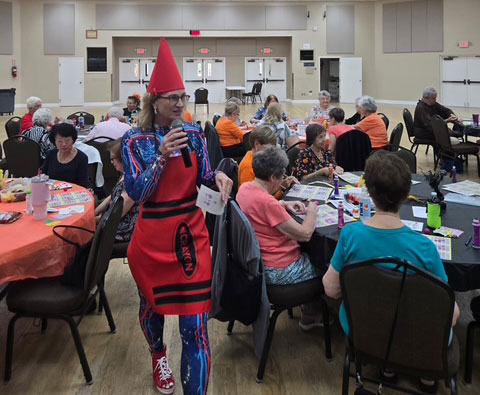
Twice a year, I help with a bingo fundraiser for the Campaign Against Human Trafficking. More than 150 people pack into one room. They come to play, to laugh, and to support a cause that matters.
And every time, I get a front-row seat to human nature.
Some people love the extras: trivia between games, playful banter, and conversation with the folks at their table. For them, the fun is the whole evening.
Others want the numbers. Just the numbers. B-7. G-52. Next. They came to play bingo, and anything else feels like it’s in the way.
I remember standing at the front one evening, looking out across the tables, and seeing genuine smiles at one table and crossed arms at another. And I felt that old, familiar pull: Fix it. Find the thing that makes everyone happy.
But there wasn’t one. Not really.
Why It Feels So Big
Here’s what I’ve come to understand: disappointing someone rarely feels small, even when it objectively is.
For most of human history, belonging to a group meant survival, and being pushed out could put you in real danger. Our brains still carry that ancient wiring. So when someone frowns at a decision we made, a quiet alarm goes off inside us. It says: You’re not safe. Do something.
Some studies even suggest that being left out stirs up parts of the brain tied to physical pain. Maybe that’s why one sigh from the back of the room can feel louder than fifty happy faces.
It’s also why so many of us learned to scan the room for trouble. We notice the one unhappy person long before we register everyone who’s perfectly comfortable. That isn’t a character flaw. It’s a protective habit that once kept us safe, even if it doesn’t always serve us now. For some of us it runs deeper still: if you’ve spent a lifetime reading the room before anyone says a word, this will feel very familiar.
The Adjusting Loop
When that alarm goes off, most of us respond the same way: we adjust.
We add a little trivia. Someone groans, so we cut it. Someone else misses it, so we bring it back. Before long, we’re not leading the room anymore. The room’s moods are leading us.
I call this the adjusting loop. On the outside, it looks like kindness and feels like being responsive. But underneath, it’s often just us trying to quiet our own discomfort.
And it has a cost. When we keep changing course, nobody gets a clear, consistent experience. The people who were happy begin to feel uncertain, while the people who were unhappy usually stay that way. And we go home exhausted, replaying every decision.
The loop also narrows our attention. We pour so much energy into the few who are upset that we overlook the many who are thoroughly enjoying themselves.
What I’m Learning to Do Instead
I haven’t mastered this. Not even close. But here’s what I’m practicing.
Listen first. I really do want to know what people need. Feedback matters, and some of it is genuinely wise; listening was never the problem.
Ask what the moment is for. Our bingo night exists to raise money and build community around a difficult cause. Remembering that purpose gives me a way to weigh competing preferences. Does a bit of laughter help people stay, give, and come back? Most of the time, yes.
Make the best call I can, then own it. A good decision isn’t necessarily one that pleases everyone; it’s one I can explain with care and confidently stand behind.
Let the disappointment land. This is the hard part. When someone is unhappy, I try not to rush in to fix it or defend myself. I can say, “I hear you,” and still keep my choice. Their feelings are real, but they aren’t an emergency.
Notice what’s happening inside me. Is that tight feeling in my chest really about them? Or is it about my need to be liked? That one question has changed a lot for me.
Questions to Sit With
If this stirs something in you, try carrying these questions with you this week:
- Where in my life am I trying to please a room that can’t all be pleased?
- When someone is let down by me, what story do I tell myself about it?
- Whose disapproval affects me most deeply, and why theirs?
- What would change if I trusted my choices a little more?
- Can I meet someone’s disappointment with kindness, without making it mine to fix?
You don’t need answers right away. Just notice what comes up.
Back to the Room
Next time I’m at that bingo night, I know what will happen. Some people will want more fun. Some will want fewer words. And all of them will be there for the same good reason.
That’s what I want to remember: the room doesn’t need me to please everyone. It needs me to show up, make thoughtful decisions, and keep our attention on why we gathered in the first place: to stand together against human trafficking.
Some folks will still leave a little let down. I can live with that. I’m learning that I can care deeply about people without carrying every emotion in the room.
That might be one of the most freeing lessons I know.
In gratitude, Tanya
The adjusting loop is a pattern, and patterns are easier to change once we can see what’s driving them. That’s the work I do in private coaching, and it’s the kind of conversation a Reset Circle is built for.